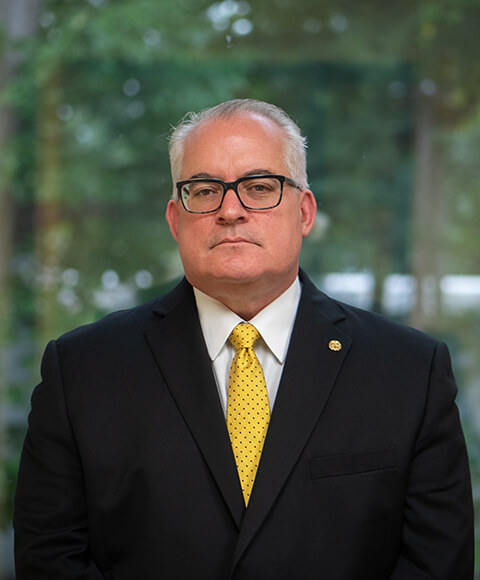
WASHINGTON, D.C. (FedScoop) — The Department of Homeland Security was looking to bring on a vendor to provide desktop support services for its Office of the Chief Information Officer last year. With 30 competitors throwing their hats in the ring, the sought-after contract ended up going to a subsidiary of CACI International in September.
Less than two months after the massive five-year, $983 million contract was awarded, Chris Granger, DHS’s deputy CIO, left government and joined the vendor.
The revolving door between the federal government and private sector is a path well-traveled, with workers regularly moving from one to the other. But there are rules governing that movement, especially when it comes to sizable contracts. After all, these large sums of money come from taxpayers’ pocketbooks — and without proper stewardship, the public ends up paying for what could be a subpar option, influenced by the connections of those responsible for finding the best possible provider.
When reached for comment, CACI told FedScoop that any connection between the contract award and Granger’s previous DHS employment “is non-existent,” and that his position at the vendor “was, and remains, a function of where in this enterprise Mr. Granger can add maximum value consistent with his post-Government restrictions.”
Granger’s situation is not unique, and, in fact, is just one of a series of ethically questionable, potential conflicts of interest that have occurred at DHS since 2025. While the ethics experts and attorneys FedScoop spoke to did not say these moves were illegal — and the organizations and individuals involved deny any wrongdoing — sources said they raised eyebrows nonetheless.
A true conflict of interest depends on the position of the government employee during procurement and their actions shortly thereafter, or before the contract is awarded. Top technology leaders within an agency are typically part of the process.
“If [the contract] is for the entire office of the CIO, then it’s likely that the CIO and deputy CIO would be part of the decision-making,” said Jerry McGinn, director of the Center for Strategic and International Studies’ Center for the Industrial Base and a senior fellow with the think tank’s Defense and Security Department.
McGinn has experience with the revolving door, having spent some time at the Department of Defense prior to joining the private sector.
“Before I left government, they gave me a whole set of things: here’s what you can do, can’t do, how long your restrictions are,” McGinn said. “They’re pretty darn strong rules.”
The General Services Administration’s Federal Acquisition Regulation serves as the primary rulebook for governing agencies and their procurement. The general rule, per FAR, is to strictly avoid any conflict of interest or even “the appearance of a conflict of interest in government-contractor relationships.”
Government workers are not barred from accepting employment with any particular private employer, but there are a host of restrictions on what government employees can do after departing.
“There are very specific rules and laws on government ethics,” McGinn said. “If they’re performed well, then the government is protected, industry is protected and individuals are protected. It’s when you go outside of those lines that trouble happens.”
In addition to the FAR, federal laws as laid out in the United States Code outline restrictions for former government employees. The Procurement Integrity Act sets guardrails as well, preventing former government employees involved in procurement decisions for contracts over $10 million from accepting any type of compensation — including via employment-related salaries — from the contractor for one year post-award. It’s a threshold easily surpassed by CACI’s nearly billion-dollar contract.
CACI said it screened Granger for conflicts before extending an offer of employment. The process included a review of the DHS ethics memorandum regarding post-government employment restrictions, and confirmation that Granger had no role in the DSS 3.0 BPA — despite being second-in-command at the office that awarded the contract. DHS did not respond to requests for comment about Granger’s time at the agency. Granger also did not respond to FedScoop’s inquiries.
“Our review indicated, and continues to reflect, that Mr. Granger had no connection to the decision-making process for the DSS 3.0 BPA procurement,” CACI said in an email. “Moreover, his responsibilities and position at CACI have no connection to the DSS 3.0 BPA, which reside in another line of business at CACI altogether.”
A familiar pattern
A few months before Granger left DHS last year, another agency IT leader made a similar move.
For nearly four years, Dave Larrimore held various high-level tech roles at DHS, including stints as chief AI and chief technology officer.
During that time, technology services provider Amivero saw substantial growth in its government contracts from the agency. Amivero provided a number of services for DHS components, from vetting and screening support for immigration enforcement to data entry and quality assurance.
As part of his work at DHS, Larrimore said he led negotiations and awarded an Enterprise User Agreement with Login.gov, according to a resume posted on his personal website. Login.gov is a General Services Administration-managed system that enables single sign-on functionality across participating government websites. DHS spends more on Amivero’s services than any agency other than GSA, with most of its contracts centering on Login.gov-related work, illustrating another tie between the former government employee and the vendor.
Larrimore joined Amivero in April 2025, the same month he departed DHS. Several months later, the law enforcement agency awarded more money than it ever had to Amivero.
While the situation and timing could be considered problematic, it’s unclear whether Larrimore had a direct relationship with Amivero during the procurement process. Larrimore and Amivero did not respond to multiple requests for comment about his time at DHS or current position at Amivero. DHS also did not respond to requests for comment about Larrimore.
Once he landed at Amivero, Larrimore would have needed to steer clear of anything that would’ve put him in front of DHS or working on an Amivero product related to a project he’d been part of at his former agency.
“He’s obviously not going to be lobbying or going back to the government for that company, because that’s illegal,” McGinn said. “The person could not provide advice on something that they were involved in with the government, especially if they were involved with the solicitation that led to that big contract.”
There are instances in which a former government employee can join a vendor and avoid conflicts of interest, though circumventing the firewalls isn’t unheard of.
“I’ve had colleagues who’ve gone to contractors and they have been parked in a division of the company way away from the contracting office for a particular project,” said Dan Meyer, partner at law firm Tully Rinckey PLLC. “I’m always suspicious that when an issue comes up on that contract, somebody’s wandering down the hall … to get their expertise.”
The financial portfolio of DHS’s recently departed top IT leader has garnered criticism regarding potential conflicts of interest, too.