Any college or university that accepts federal funding—including student federal financial aid—is obligated to provide equitable educational opportunities to students with disabilities. Under the Americans with Disabilities Act, ADHD, Autism, TBI, PTSD and major depressive disorder all count as disabilities, and may be eligible for accommodations.
How are university accommodations different from high school accommodations?
The accommodations you get in college may be less, well, accommodating. At the college level, disability accommodations lower barriers and provide equal access to educational opportunities. This differs from high school, where the goal is to provide success, not just access. You can still fail your college classes or be rejected from programs. But the reason you get rejected or fail in college should never be lack of access.
Colleges will not change course objectives or requirements for you. You may be given more time to complete the tests, but the test questions will not be interpreted or changed for you. You may be given additional tools to complete the assignments, but you will have to complete the same assignments.
College accommodations are more limited in scope than high school special education services. If you received special education services—like speech language therapy in high school, for example—your college is not obligated to do so. Nevertheless, IEPs and 504 Plans are important documents you can and should provide to your school’s disability services coordinator.
You can contact us 24 hours a day, 7 days a week via phone at 8885294543, by e-mail at info@tullylegal.com or by clicking the button below:
What accommodations can I get for my ADHD or Autism in college?
No prescribed set of accommodations is automatically given to anyone with a particular disability. Instead, accommodations are determined through an interactive process between the student and disability services. They should be unique to you and your situation.
University accommodations cover four basic areas: testing, classroom and communication, format/devices, and housing/dining. Some examples of college-level accommodations for neurodivergence like ADHD or Autism include:
Testing
- Taking tests in a separate room away from distractions
- Taking tests in the morning hours when your medication is most effective
Classrooms and Communications
- Having a peer notetaker share their notes with you
- Receiving lecture notes from the professor to supplement your own
- Preferential seating in classrooms
Accessible Format/Assistive Devices
- Using e-text, enabling you to highlight words as you read
- Having tests reformatted so one question appears per page
- Audiobooks, TTS (text to speech), or screen reader software like JAWS
- Noise-cancelling headphones
Accessible Housing/Dining/Parking
- A single dorm to minimize distractions and control the sensory environment
- A dorm that provides laundry or food services
- If your school requires freshman to live on campus, accommodations may enable you to live off campus
I think I have ADHD but haven’t been diagnosed yet. How do I get accommodations?
The process begins with contacting or registering with your school’s designated student disability services office. Just search online for your school’s name and student disability services. Schools all have their own procedures, but you will need to provide documentation of your disability.
Your school may have particular standards for what medical documentation they will or will not accept as proof of your disability. Some colleges might accept an ADHD diagnosis from a primary care physician or psychologist, while others require a full neuropsychological evaluation.
Neuropsychological evaluations (more commonly, neuropsych evals) evals are considered the gold standard for documentation of neurodivergence like ADHD, TBI, PTSD, and Autism. They can be difficult or costly to come by, unfortunately. Contact your school and ask what documentation they require before going through the process.
Ready to book your consultation? Click below to pay our consultation fee and book your meeting with an attorney today!
My school won’t accommodate my disability without a neuropsych eval, but I can’t get one; what can I do?
If your school is demanding a neuropsychological evaluation before they will give you accommodations, and you can’t access a neuropsychologist to evaluate you, then you are unable to access equal education opportunities. Every school should have a grievance procedure to contest a decision to deny accessibility. Connect with the ADA coordinator to discuss your concerns. Campus groups or representatives who advocate for students with disabilities may also be able to assist.
If campus resources can’t help you, there are attorneys dedicated to representing students in need of disability accommodations. College is a huge investment in your time and money. If you need accommodations to succeed and you aren’t getting them, consulting a higher education attorney may be a worthwhile investment.
Tully Rinckey attorneys understand that issues surrounding disability accommodations in higher education can be challenging, and they will handle your matter with the attention and tact it deserves. If you have additional questions about your rights as a student with a disability, our team of attorneys is available to assist you today. Please call 8885294543 to schedule a consultation, or schedule a consultation online.
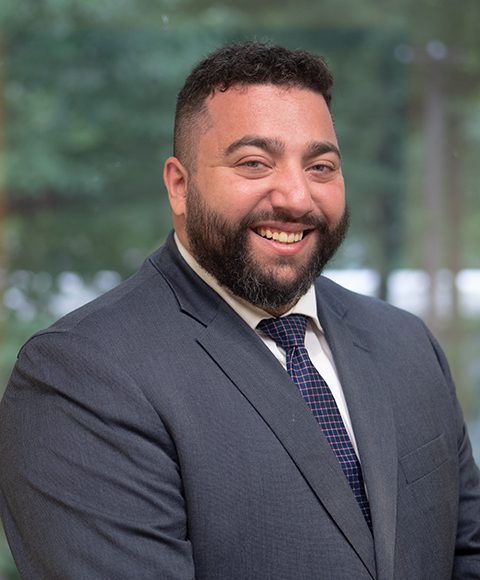
Nicholas A. Marricco is a Senior Associate in Tully Rinckey PLLC’s Manhattan Office, where he focuses his practice on Education Law, Special Education Law, Higher Education Law, Federal Employment Law, and New York State Employment Law. Nicholas has also represented countless families of children with special needs in CSE meetings, CPSE meetings, manifestation determinations, and Impartial Hearings. He is among the few New York State Special Education Attorneys who had an IEP and received special education services as a child. Nicholas’ parents fought for his education as a child and now he zealously advocates for all his clients like his parents did for him.