Inappropriately using generative AI (GenAI) to complete assignments or take exams is prohibited by most colleges and universities as “falsifying academic materials” or “plagiarism.” Meaning, accusations that you used GenAI in the academic setting must not be treated lightly.
How to Respond to an Allegation of Using AI to Write in College
The impact of academic integrity violation charges, like using GenAI to write your paper or complete your exam, can be long lasting and devastating. Consider the following when facing accusations of GenAI-based academic dishonesty:
Review Your School’s Generative AI and Academic Integrity Policies & Procedures
Familiarize yourself with the disciplinary and appeals procedures at your school by consulting the Student Handbook. Therein, you will find any school-wide GenAI policy as well as your rights during an academic integrity investigation. Many colleges and universities specify a certain timeline the investigation must be completed by and whether you are entitled to a hearing.
Consult the Course Syllabus
Review the course syllabus for any guidance on GenAI use. Many colleges and universities have GenAI rules so specific that they are specific to each course. Meaning, you must review each course syllabus to determine the controlling GenAI policy.
Check the Student Handbook
If there is no explicit AI provision provided for an individual course, that does not mean the school itself has no policy, or that any and all AI use is permitted. As of now, both Cornell University and Bard College hold a blanket GenAI policy that students should assume they are not permitted to use GenAI for coursework unless the instructor explicitly tells them otherwise. On the other hand, the University at Buffalo, a flagship SUNY school, has no universal AI policy for its students at present. Instead, instructors are expected to inform students if they are not permitted to use AI in some or all circumstances.
You can contact us 24 hours a day, 7 days a week via phone at 8885294543, by e-mail at info@tullylegal.com or by clicking the button below:
Be Mindful in All Communications and Do Not Respond Right Away
Charges of academic integrity violations are usually required by college rules to be made in writing. If you have been issued a formal notice concerning your academic integrity, the situation is already serious enough to merit consulting an education attorney. Do not respond to any emails regarding charges of cheating, plagiarism, or academic dishonesty before speaking with a lawyer experienced in defending college students.
Seek Support Immediately
Do not wait to speak with a higher education attorney. The earlier in the process you seek knowledgeable, professional support, the more helpful and impactful that support will be.
One event in the academic integrity process often triggers a deadline for the next. Once a professor suspects that a student cheated, things can move quickly. College and University rules often limit the time instructors have between first identifying potential cheating, and then either informing the student or reporting to the appropriate administrators, like an office dedicated to academic integrity matters or dean. Upon receiving notice that you are suspected of cheating, it is a good idea to consult with an experienced education attorney before determining the next steps.
Ready to book your consultation? Click below to pay our consultation fee and book your meeting with an attorney today!
What to Do if Your Instructor Asks to Schedule a Meeting With You
If concerns of academic dishonesty arise, your professor may attempt to schedule an unspecified meeting with you before issuing a formal written notice. Should you suspect the meeting is about academic integrity, confirm in writing what the meeting is about.
Assume that communications with your instructor will become part of the record. Always be courteous and professional in any and all correspondence with faculty and staff. Do not risk the situation of being disciplined for your conduct separate from (and regardless of the result of) the alleged academic integrity violation.
It is highly advised to speak with an education lawyer before responding to an allegation of cheating. Some schools may require instructors go through a more “informal” resolution process with students before pursuing formal charges at the university level. If that is the case, such a meeting with your professor could trigger a deadline within the academic discipline process. Be aware that falsifying information or lying at any stage in your appeal may result in further academic sanctions by your college or university.
Your Rights When Defending Yourself Against Accusations of Using GenAI
If your professor accuses you of using AI to write for you, any charges, investigations, and appeals will follow a standardized academic integrity process. Both these procedures as well as details regarding your rights as an accused student should be available to you in the Student Handbook and on your school’s website. It is well worth contacting an experienced education attorney who can review these materials with you and help you navigate the appeals process (if not avoid it entirely).
The Impact of Academic Integrity Violations During and After School
Charges of academic integrity violations at the college and university level are very serious and merit a serious response. The consequences of a formal academic dishonesty charge can extend beyond college life. Academic sanctions can range in severity from failing the assignment or course, to suspension or expulsion from the university. Any of these can come with a notation on your official, permanent transcripts specifying the reason as academic dishonesty.
When to Consult an Education Attorney
It is time to speak with an attorney as soon as you realize you are being accused of an academic integrity violation. Deadlines can move quickly, policies & procedures can be difficult to interpret, and mistakes can be costly. A cheating accusation need not ruin your academic or post-academic career. It is possible to overcome charges of using GenAI to cheat with a measured strategy and aggressive support.
Navigating the student disciplinary and appeals process while defending oneself against allegations of academic dishonesty can be overwhelming. Tully Rinckey’s higher education attorneys will handle your matter with the attention and tact it deserves. If you have additional questions about your rights as a student and due process in higher education, our team of attorneys is available to assist you today. Please call 8885294543 to schedule a consultation, or schedule a consultation online.
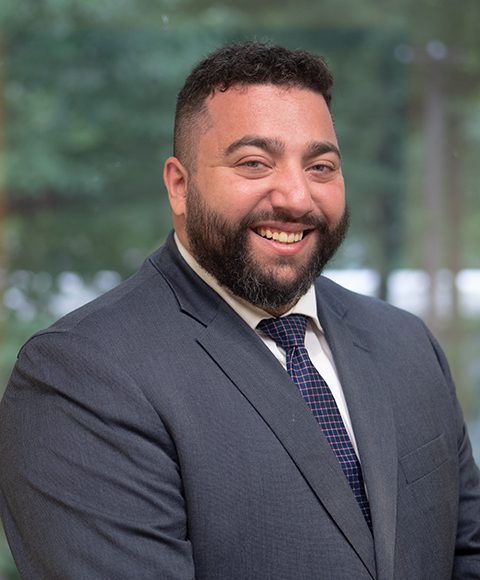
Nicholas A. Marricco is a Senior Associate in Tully Rinckey PLLC’s Manhattan Office, where he focuses his practice on Education Law, Special Education Law, Higher Education Law, Federal Employment Law, and New York State Employment Law. Nicholas has also represented countless families of children with special needs in CSE meetings, CPSE meetings, manifestation determinations, and Impartial Hearings. He is among the few New York State Special Education Attorneys who had an IEP and received special education services as a child. Nicholas’ parents fought for his education as a child and now he zealously advocates for all his clients like his parents did for him.