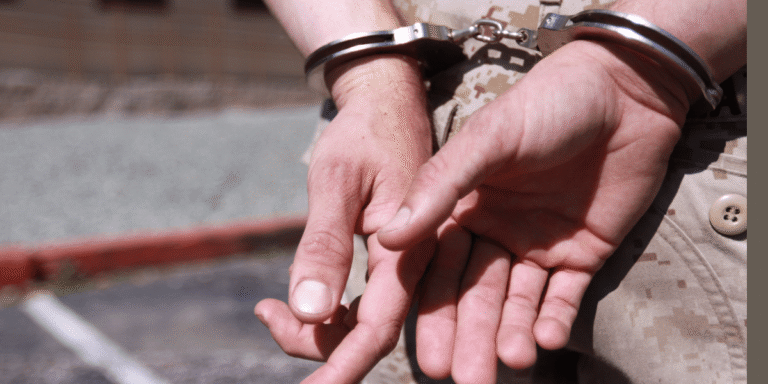
Imagine receiving a call from your commander, asking you to report to the conference room because “someone just wants to ask you a few questions.” You haven’t been charged with anything. No one has read you your rights. It’s not a courtroom type of setting with a military judge or panel waiting for you. Instead, it feels informal. It isn’t. In most cases, an administrative investigation like that is just the beginning.
Whether it’s an Army AR 15-6 investigation, a US Air Force or US Space Force Commander-Directed Investigation (CDI) under DAFMAN 1-101, a US Navy or US Marine Corps JAGMAN investigation, or a US Coast Guard administrative investigation, these “informal” inquiries often become the government’s first official version of what happened. The outcome of this investigation may well serve as the basis for any nonjudicial punishment (aka “NJP”), administrative separation, command relief, security clearance revocations, promotions, or even criminal prosecution to follow.
And all of this just about always starts with “We just need to ask you a few questions.”
Before You Answer a Single Question, Read This.
If there is one moment when most service members go wrong, it’s this: they do not call a lawyer when an investigation begins. They call after the investigation has already been completed. Or after providing a statement. Or worse, they only call after receiving notice of command’s decision, or once they’ve been issued an adverse action.
What do many scenarios ending in adverse action have in common? They’re based on a version of events gathered through “just a few questions.” In reality, this was an investigation, executed by an appointed investigative officer (“IO”). Which is why the first thing a service member should do is exercise their rights by securing military defense counsel ASAP. This is critical whether you have been identified as a subject of investigation or witness. We explain this point in greater detail in our article: “SHUT UP: A Former Drill Sergeant’s Guide to Understanding Your 31(b) Rights Under the UCMJ.”
Whether you’re a junior enlisted service member, a senior NCO, a chief, a warrant officer, or a commissioned officer, you are not immune to investigation. Every branch has commanders who rely on those very investigations to make career-defining decisions.
For US Army personnel, the DoW revised AR 15-6 on June 22, 2025, following Army Directive 2025-07, Standardization of Investigation and Personnel Action Processes, dated May 22, 2025. The changes were intended to improve how allegations are screened, how investigations are initiated, and how related personnel actions are handled. Nonetheless, this does not guarantee a fair investigation. These revisions direct commanders to assess whether there is sufficient credible information to justify opening an inquiry or investigation, unless another authority requires one.
In plain English, the Army does not need enough evidence to prove misconduct before investigating. That would make investigations impossible. But an allegation should amount to more than unsupported speculation.
You can contact us 24 hours a day, 7 days a week via phone at 8885294543, by e-mail at info@tullylegal.com or by clicking the button below:
Hypo 1: The NCO Accused by a Witness Who Was Not There
A staff sergeant is accused of making a threatening statement during a meeting. The complaint comes from a Soldier, who heard about the statement from someone else. The Soldier allegedly threatened says the staff sergeant was angry, but did not threaten anyone. Three other Soldiers were present at the meeting. The investigator interviewed only one of them. Nevertheless, the investigation expands into whether the staff sergeant has a “pattern of intimidation.” After reviewing two old counselings and interviewing several Soldiers who had unrelated disagreements with the NCO, the IO finds that the allegation does indeed fit an established leadership pattern.
No one interviews the person who sat beside the alleged victim. No one examines the full context of the earlier counselings. But weeks later, the investigator concludes that the staff sergeant failed to exercise proper leadership and oversight, thereby substantiating findings of hazing. Based on those findings, the command issues a General Office Memorandum of Reprimand (GOMOR) which consequently triggers an administrative separation. Had he sought experienced legal counsel when the AR 15-6 investigation began, critical witnesses and overlooked evidence may have been identified before the investigation could become the command’s official narrative and serve as a basis for adverse action.
Hypo 2: The Sailor Whose Investigation Became Captain’s Mast Evidence
A petty officer is accused of misusing a government travel card and submitting an inaccurate travel claim. The command begins a preliminary inquiry under the JAGMAN. Meanwhile, the petty officer assumes the issue is financial and administrative. He thinks if he just volunteers a statement to “clear things up,” command will assess him fairly. During the inquiry, the command obtains travel records. The investigating officer concludes that the petty officer knowingly used the card for unauthorized expenses and made a false official statement when questioned about one transaction. Later, the commanding officer uses that investigation to decide whether to dispose of the allegations at Captain’s Mast. The investigation did not automatically become nonjudicial punishment, but it did supply the factual record supporting that decision. Had the Sailor retained experienced legal counsel during the investigation, records and mitigating evidence could have been presented before the command could rely on that investigation when deciding whether to proceed with Captain’s Mast.
Hypo 3: The Airman Whose Group Chat Became the Entire Case
An Air Force technical sergeant becomes the subject of a Commander-Directed Investigation (CDI) after screenshots from a private group chat are reported to the command. The messages appear to show the technical sergeant mocking a junior Airman and encouraging others to exclude them from a work event. The investigating officer relies on the screenshots but never reviews the complete conversation, which provides important context about the exchange. The CDI ultimately concludes that the technical sergeant engaged in bullying and abused supervisory authority. Early consultation with experienced legal counsel could have helped the technical sergeant better understand the CDI process and make informed decisions before the investigation reached its conclusions.
Ready to book your consultation? Click below to pay our consultation fee and book your meeting with an attorney today!
Hypo 4: The Marine Accused of Hazing
A Marine corporal is accused of hazing after a junior Marine reports being forced to perform physical exercises after making mistakes during field preparation. Several witnesses agree that physical activity occurred. Their descriptions of why it occurred are different. Two say it was corrective training. One says it was punishment. Another says the junior Marine volunteered after joking that he needed extra conditioning. The IO then interviews the complainant first and adopts the term “hazing” in later witness questions. Instead of asking each witness to describe what happened, the IO asks whether the corporal “participated in the hazing incident.” IO’s report later states that multiple witnesses confirmed hazing. In reality, multiple witnesses confirmed physical activity. Had the corporal retained experienced legal counsel when the investigation began, counsel could have advised him on the significance of the interview process, the investigator’s questions, and how the governing definition of hazing, not merely the investigator’s characterization, would ultimately determine the case.
In conclusion, administrative investigations are more than mere fact-finding. They often serve as the roadmap for every decision that follows. Once it’s in writing, changing the government’s narrative becomes significantly more difficult. “Just a few questions” can make or break a military career. So, exercise your rights under Article 31(b): obtain qualified military legal counsel before saying anything.
NOTE: The scenarios in this article are fictional composites created to illustrate recurring issues in military administrative investigations. They are not descriptions of specific clients or cases.
This article is provided for general educational and informational purposes only. It does not constitute legal advice, does not create an attorney-client relationship, and is not a substitute for advice from an attorney who has reviewed the allegations, evidence, deadlines, service-specific regulations, and individual circumstances of a particular case.
Tully Rinckey attorneys understand that military investigations can be challenging, and they will handle your matter with the attention and discretion it deserves. If you have additional questions about navigating your rights and obligations during a military investigation, our team of attorneys is available to assist you today. Please call 8885294543to schedule a consultation, or schedule a consultation online.
Michelle Alvarado Salermo, Esq. brings over 14 years of high-speed service in the U.S. Army, federal government, and private legal sector to her role as Associate Attorney in Tully Rinckey PLLC’s Buffalo office. A former U.S. Army Sergeant First Class, combat veteran, and former federal Claims Examiner for the U.S. Department of Labor, Michelle provides mission-driven legal counsel in federal litigation, military law, federal employment, corporate law, and emerging cybersecurity and technology law.