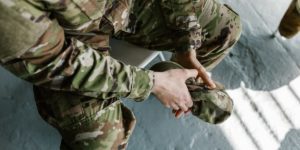
The U.S. military takes its commitment to serving all Americans, not only those of one party, very seriously. Individual servicemembers play a key role in maintaining a nonpartisan military by regulating their own partisan political activities. These responsibilities are not always clearly understood, however. What follows is a general overview and some practical guidance for servicemembers before engaging in politics, whether it is election season or not.
Department of Defense Directive 1344.10 (DoDD 1344.10)
The most comprehensive regulations covering political activity are found in Department of Defense Directive 1344.10 (DoDD 1344.10). Component-specific regulations (like the Army’s AR 600-20 Appendix B) reinforce this guidance.
In short, DoDD 1344.10 limits partisan political activity, mainly for members on active duty (which includes annual training and full-time National Guard duty). Reserve and Guard members not on active duty have more latitude but must still avoid any appearance of official endorsement. Servicemembers must not give the impression, directly or indirectly, that the U.S. military is partisan: i.e., that the U.S. military supports or endorses one political party or candidate over another.
The military holds servicemembers to a high standard of conduct because they do, in a sense, represent their branch and the Department of War (DoW). Their conduct reflects upon the military. This does not mean that servicemembers are forbidden from the political process. They are generally prohibited from active partisan campaigning and from activities that may imply military partisan political support.
Servicemembers who violate DoDD 1344.10 risk administrative action or court-martial. Potential charges may include Article 88, Contempt toward officials (for officers); Article 92, Failure to obey a regulation; and Article 134, General article.
What Might Imply Military Partisan Political Support?
Active duty servicemembers must exercise caution when engaging in partisan political activity, i.e., activity that may give the impression of military support for one party or candidate over another. While some political engagement may be permitted while off duty and away from government property, some forms of activity—like fundraising for a particular party—are prohibited, period.
When engaging in political activity, the following factors may introduce risk of violating DoDD 1344.10:
Wearing a Uniform: A servicemember may attend political events as a spectator and take part in nonpartisan activities. Doing so in uniform is prohibited because it may signal a degree of official military or department support that is inappropriate.
Note: The restriction on wearing the uniform to political rallies and events applies to Reserve, Guard, and retired members as well as active duty military.
See our article for more information: Can I Vote While in Uniform? Prohibited Partisan Political Activity Explained.
Using Government Facilities or Property: In addition to official uniforms, utilizing military- or government-owned property, vehicles, buildings, etc. for use in political activities may signal official endorsement, which is prohibited under DoDD 1344.10.
Note: This includes using government-owned devices to engage with partisan political posts online, even during off-duty hours.
Displays, Signage, Swag: Any number of things can contain visual messaging that supports a particular candidate or party, like bumper stickers, lawn signs, t-shirts, hats, flags, and mugs. The directive bars partisan signs, posters, and banners that are visible to the public at on-post housing. As a cautious practice, keep items like these off government property and out of the workplace altogether.
While a bumper sticker on your POV is permitted, large political signs, banners, or posters on a privately-owned vehicle are not. The directive does not prohibit a campaign lawn sign at an off-post residence.
Note: Privatized on-post housing qualifies as on-post, and no publicly visible partisan displays are permitted. However, you may park your personal vehicle (with a bumper sticker) on government property.
Publishing or Co-Signing Partisan Publications or Endorsements: Servicemembers should exercise caution before writing, sharing, or signing on to anything that may convey the impression of military support. For example, a letter to the editor stating your personal views is permitted, but one soliciting votes for a party or candidate is not.
Note: Be careful to never solicit donations or campaign contributions for a partisan candidate, party, or group.
You can contact us 24 hours a day, 7 days a week via phone at 8885294543, by e-mail at info@tullylegal.com or by clicking the button below:
How Can Active Duty Military Be Politically Active?
While active duty members of the Armed Forces are more restricted than private citizens in terms of political expression, they are not completely barred from politics.
Voting: Servicemembers are encouraged to vote and may encourage others to vote. They must not use their rank or position to encourage or pressure others to vote for a particular candidate or party.
Attend debates, rallies, conventions, and fundraisers: So long as they are off duty, not in uniform, and do not signal that their presence is tied to their military status, servicemembers are free to attend debates, rallies, conventions, and fundraisers as a spectator, not a participant or speaker.
Express personal political opinions: It is critical that servicemembers never give the appearance of sharing a political opinion in their capacity as a member of the Armed Forces, or that they speak for all servicemembers or the military at large. Servicemembers should not share partisan political views while in uniform, or post online from government accounts or devices.
When off duty, you may respectfully share your opinion on your personal device from your personal account, or like and follow partisan political groups. If you are identifiable as a servicemember on your social media accounts, include a disclaimer that your opinion is yours and yours alone, not those of your branch, the U.S. Government or DoW. Do not engage with partisan fundraising posts. Be aware that you are still held to a high standard of conduct online. Some online engagement may be cause for discipline for reasons other than partisan political activity.
Protecting Your Career During and After Election Season
Military servicemembers are U.S. citizens and as such are encouraged to enjoy the full rights of citizenship. However, they also carry additional responsibilities that civilians do not. Before sharing a partisan political opinion online, in print, or in person, stop to consider whether your words—whether intentionally or not—may implicate the military as a whole. If you are speaking in your capacity as a servicemember, wearing your uniform, on duty, or on government property, be extra cautious before sharing what might be construed as partisan political activity.
The military law attorneys at Tully Rinckey PLLC served long before they became lawyers. They know the military, they know the law, and they are ready to fight hard on your behalf. If you have additional questions about your rights and responsibilities as a servicemember, our team of dedicated military law attorneys is available to assist you today. Please call 8885294543 to schedule a consultation, or schedule a consultation online.
Ira K. Rushing focuses much of his time on the representation of military personnel and federal agents and employees, as well as private employers and non-profit corporations. His practice areas include military law, national security representation, veterans’ benefits, and labor and employment. Ira also currently serves as a judge advocate in the Mississippi National Guard. From brigade-level judge advocate in one of the largest units in the Army National Guard to international and operations law attorney in a small joint special operations task force, Ira has demonstrated the ability to analyze and understand complex military issues and provide informed legal advice. Having spent 11 years as an enlisted Marine and Soldier before receiving his commission, Ira understands the unique and nuanced experiences of servicemembers and their families and is dedicated to their success.
Ready to book your consultation? Click below to pay our consultation fee and book your meeting with an attorney today!