If you or your child/student is accused of misconduct or wrongdoing at school, what to do next can be overwhelming for both the parents and students.
Discipline at school is intended to balance the need to maintain a safe and orderly learning environment, but also recognize a student’s right to due process. While most schools employ zero-tolerance policies for certain types of misbehavior, they are also required to provide clear and fair processes — required by law — for students accused of wrongdoing.
You can contact us 24 hours a day, 7 days a week via phone at 8885294543, by e-mail at info@tullylegal.com or by clicking the button below:
Legal challenges at school commonly arise from improperly handled disciplinary actions, such as suspensions or expulsions that do not provide students with the required level of due process. Everyone, however, is entitled to a fair process if accused of wrongdoing.
So what should you do if you or your student is accused of wrongdoing, but does not receive what is called “due process” for the alleged misconduct at school?
What is Due Process and How Does it Relate to Students?
A student’s right to fair treatment regarding school discipline doesn’t actually stem from school policy. It comes directly from the U.S. Constitution.
The Due Process Clause of the Fourteenth Amendment states that no state shall “deprive any person of life, liberty, or property, without due process of law.” This amendment, ratified in 1868, requires all levels of government, including schools, to operate within legal bounds.
According to govfacts.org, due process promises two things. First, it guarantees legality, in that the government must follow the law, a principle that traces back to the Magna Carta in 13th-century England. Second, it promises fair procedure. It’s not enough for a public school to follow written rules, the school must also provide a fair process before taking away something significant from a student.
While all 50 U.S. states have laws requiring that public education be provided to children, creating a “legitimate claim of entitlement” to education for their students, the U.S. Supreme Court established that such “government-created entitlement” qualifies as “property” under the Fourteenth Amendment.
This was the central finding in the landmark 1975 case Goss v. Lopez, where the Court ruled that because Ohio had chosen to provide education to its students, it couldn’t withdraw that right for misconduct without following “fundamentally fair procedures.” The case centered on students from public schools in Columbus, Ohio, who were suspended for up to 10 days for misconduct. None of the students had been given a hearing, and they subsequently filed a class-action suit, claiming a violation of their Fourteenth Amendment rights to due process, which requires prior notice and an opportunity to be heard. A federal district court decided in favor of the students.
Fair Student Discipline — or Not?
According to the U.S. Department of Education, while many schools and districts across the country have taken steps to implement fair student discipline approaches that keep students safely in learning environments, nationwide data continues to suggest that some school practices — such as suspensions, expulsions, and the use of corporal punishment — harm or unnecessarily push students out of school for behavior that does not pose a threat to others or the student themselves.
Further, these practices often disproportionately affect students of color, students from low-income backgrounds, English learners, students with disabilities, and students who identify as LGBTQ, and a pattern seen as early as preschool, according to the U.S. Department of Education.
Further, zero-tolerance policies have faced legal challenges because they often result in harsh, non-discretionary punishments for minor offenses, and legal challenges can result.
Ready to book your consultation? Click below to pay our consultation fee and book your meeting with an attorney today!
Due Process vs. Creating an Inclusive Environment
The U.S. Department of Education has identified principles regarding actions schools and school districts can take to create inclusive, safe, supportive, and fair learning environments — and discipline — for students. The five guiding principles suggest that schools:
- foster a sense of belonging through a positive, safe, welcoming, and inclusive school environment;
- support the social, emotional, physical, and mental health needs of all students through evidence-based strategies;
- adequately support high-quality teaching and learning by increasing educator capacity;
- recruit and retain a diverse educator workforce; and
- ensure the fair administration of student discipline policies in ways that treat students with dignity and respect (including through systemwide policy and staff development and monitoring strategies).
If you or your child/student has not received appropriate due-process rights regarding an alleged matter at school, an education attorney can provide the assistance you need.
Tully Rinckey attorneys understand that issues surrounding student discipline and balancing a student’s right to due process, and they will handle your matter with the attention and tact it deserves. If you have additional questions about your rights as a student, our team of attorneys is available to assist you today. Please call 8885294543 to schedule a consultation, or schedule a consultation online.
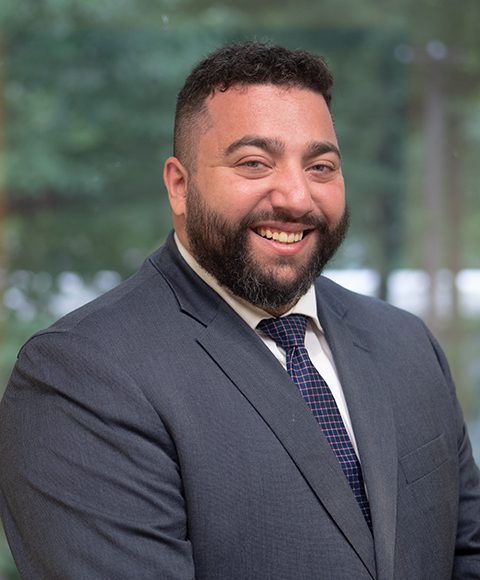
Nicholas A. Marricco is a Senior Associate in Tully Rinckey PLLC’s Manhattan Office, where he focuses his practice on Education Law, Special Education Law, Higher Education Law, Federal Employment Law, and New York State Employment Law. Nicholas has also represented countless families of children with special needs in CSE meetings, CPSE meetings, manifestation determinations, and Impartial Hearings. He is among the few New York State Special Education Attorneys who had an IEP and received special education services as a child. Nicholas’ parents fought for his education as a child and now he zealously advocates for all his clients like his parents did for him.