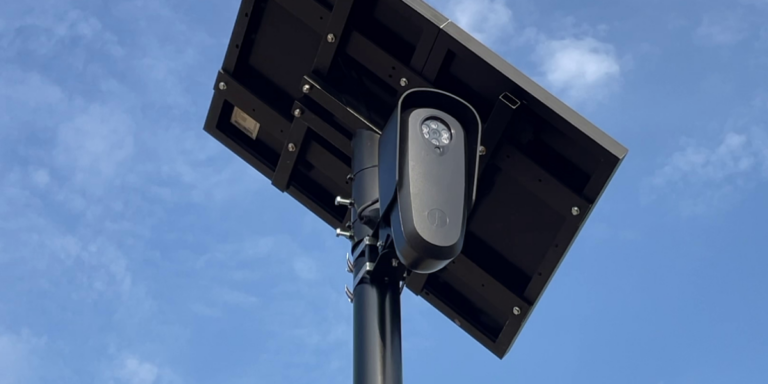
Digital surveillance technology is playing an increasingly significant role in criminal investigations, and so-called “Flock” cameras are among the most prominent examples. By collecting license plate and vehicle data, Flock cameras can provide investigators with valuable leads, but their growing use also raises important evidentiary and constitutional questions when prosecutors seek to introduce the surveillance images in court.
What Are Flock Cameras?
Flock cameras are automated license plate reader (ALPR) systems that assist law enforcement by capturing images of passing vehicles and analyzing identifying information. Using high-resolution cameras and software, the technology records a vehicle’s license plate number, along with observable characteristics such as its make, model, color, and other distinguishing features.
The system also logs the date, time, and location where the vehicle was detected, allowing investigators to review vehicle movements and identify potential connections to criminal activity. Importantly, a Flock camera alert or “hit” is generally considered an investigative lead rather than direct evidence that a crime occurred or that a particular person committed an offense. While the information may help place a vehicle near the scene of a crime or assist officers in locating a suspect vehicle, additional investigation and corroborating evidence are often necessary before prosecutors can establish criminal liability in court.
Can Prosecutors Prove the Evidence Is What They Claim It Is?
Before Flock camera data is admitted into evidence, prosecutors generally must satisfy applicable authentication requirements.
To authenticate Flock camera evidence, prosecutors typically must establish a foundation showing that the system properly recorded the information at issue. This often involves presenting testimony or documentation demonstrating how the technology operates and confirming that the evidence offered in court is a true and accurate representation of the original record. While the precise requirements may vary by jurisdiction, the prosecution generally bears the burden of showing that the evidence accurately reflects what the camera recorded and that there is sufficient reason to trust its accuracy.
A law enforcement officer involved in the investigation may testify about how the information was obtained and used during the case. Prosecutors may also rely on records custodians or company representatives who can explain the operation of the system, data storage procedures, and record-retention practices. In addition, system-generated logs, timestamps, metadata, and audit records may help establish when the information was collected and whether it has been modified. Prosecutors may further seek to demonstrate that the camera was functioning properly at the time of the alleged detection, thereby supporting the reliability of the resulting data.
You can contact us 24 hours a day, 7 days a week via phone at 8885294543, by e-mail at info@tullylegal.com or by clicking the button below:
Challenging Authentication of Flock Camera Footage
Defense attorneys may argue that records are incomplete, that important data is missing, or that the prosecution cannot adequately explain how the information was collected and preserved.
Questions may also arise regarding camera malfunctions, software errors, image quality issues, or inaccuracies in automated license plate recognition technology. In some cases, the defense may contend that the prosecution has failed to lay a sufficient evidentiary foundation by neglecting to call a necessary witness or provide adequate documentation regarding the operation of the system.
Chain of custody is also an important consideration when prosecutors seek to introduce Flock camera data. Because the system generates electronic records, prosecutors may need to establish how the data was stored, retrieved, and handled throughout the investigation, including evidence regarding access controls, retention policies, and audit logs.
If the prosecution cannot adequately account for the evidence from its collection through trial, the defense may argue that the reliability of the records has been compromised, potentially affecting either their admissibility or the weight a jury chooses to give the evidence.
Is Flock Safety Camera Technology Reliable?
The reliability of ALPR technology is often a key issue when Flock camera evidence is presented in criminal court. Modern ALPR systems use a combination of high-resolution cameras, artificial intelligence, and optical character recognition (OCR) software to identify and record license plate numbers as vehicles pass through a monitored area. These systems are generally considered effective investigative tools and can quickly process large volumes of vehicle data that would be difficult for law enforcement officers to collect manually. However, like any technology, ALPR systems are not infallible, and questions regarding their accuracy can become significant when the data is used as evidence in a criminal prosecution.
Potential sources of error may include poor lighting conditions, adverse weather, obstructed or damaged license plates, and the possibility of similar-looking characters being misread by the software. In some cases, a vehicle’s make, model, or color may also be incorrectly identified, creating the risk of a false match.
Because of these limitations, defense attorneys may challenge the reliability of a particular Flock camera detection, arguing that the technology produced an inaccurate result or that investigators relied too heavily on an automated system without sufficient corroboration. In the courtroom, courts must determine whether such concerns affect the admissibility of the evidence itself or merely the weight that a judge or jury should give it. Depending on the circumstances, expert testimony regarding the operation, accuracy, and limitations of ALPR technology may be introduced to help the court assess the reliability of the evidence and its significance in the case.
Constitutional and Evidentiary Defenses
Even if a camera correctly identifies a vehicle, the defense may argue that investigators have drawn conclusions not supported by the evidence. For example, the presence of a vehicle in a particular location does not necessarily establish who was driving it at the time, and ownership of a vehicle alone does not prove that the owner was involved in any criminal activity. Alternative explanations may exist for why a vehicle was near a crime scene, requiring prosecutors to present additional evidence linking a defendant to the alleged offense.
Defense counsel may also raise constitutional objections, including arguments that certain uses of ALPR technology implicate Fourth Amendment protections against unreasonable searches and seizures. As law enforcement agencies expand their use of vehicle-tracking technologies, courts may increasingly be asked to address privacy concerns associated with the long-term collection and analysis of location data, as well as broader questions regarding the role of surveillance technology in criminal investigations.
As a result, whether a Flock hit contributes to probable cause often depends on the totality of the circumstances rather than the alert standing alone.
Legal Implications of Misusing Flock Cameras
While Flock camera technology can provide valuable investigative leads, concerns have emerged regarding the potential misuse of the system by individuals with authorized access. Law enforcement personnel generally are permitted to access ALPR data only for legitimate governmental purposes, such as conducting criminal investigations, locating missing persons, or addressing public safety concerns.
Accessing the system for personal reasons may violate department policies and state or federal laws governing the authorized use of government databases and official information systems.
In a recent case, according to news reports, an investigator with the Albany County Sheriff’s Office was arrested after allegedly using the Flock camera system to access information related to a former girlfriend rather than for a legitimate law enforcement purpose. A subsequent audit reportedly concluded that the investigator had tracked the former girlfriend’s vehicle nearly 3,000 times and had conducted hundreds of searches involving the license plates of four other individuals. According to the allegations, the investigator performed more than 4,000 unauthorized database searches since January 2026, none of which were connected to an official criminal investigation or other authorized governmental function.
Ready to book your consultation? Click below to pay our consultation fee and book your meeting with an attorney today!
Individuals accused of misusing Flock camera data may face administrative discipline, including suspension, termination, loss of law enforcement certification, or decertification proceedings. Depending on the circumstances, unauthorized access may also give rise to criminal charges involving official misconduct, unauthorized use of a computer system, computer trespass, or misuse of government records.
From a civil liability perspective, improper access to vehicle-location data could potentially support claims for invasion of privacy, abuse of authority, or violations of state and federal civil rights laws. Government agencies may also face scrutiny regarding their oversight practices, auditing procedures, and safeguards designed to prevent unauthorized searches.
The Albany County incident further underscores the importance of robust auditing mechanisms. Because Flock systems typically maintain searchable logs showing who accessed data, when the search occurred, and what information was reviewed, unauthorized activity may be more easily detected during internal audits or external investigations.
The Future Impacts of Flock Cameras on Criminal Matters
As Flock cameras and license plate reader networks continue to expand across New York state and the country, courts will increasingly be asked to balance the investigative benefits of automated surveillance technology against the privacy interests protected by the Constitution. Whether Flock camera evidence ultimately strengthens a prosecution or becomes the focus of a defense challenge will often depend on how the data was collected, preserved, authenticated, and used throughout the investigation.
Tully Rinckey attorneys understand that issues surrounding criminal cases can be challenging, and they will handle your matter with the attention and tact it deserves. If you have additional questions about your rights in New York State, our team of criminal defense attorneys is available to assist you today. Please call 8885294543 to schedule a confidential consultation, or schedule a consultation online.
As a Partner at Tully Rinckey PLLC, Derrick T. Hogan, Esq. primarily focuses his practice on criminal defense and heads the Firm’s Criminal Practice in its Latham office. Derrick has represented clients facing all types of criminal charges, at both the State and Federal level, ranging from simple traffic infractions to complex murder cases. He can be reached at info@tullylegal.com or at (518) 556-2249.