If you are a college student with a disability recognized by the ADA that impacts your college experience, it is not too late to apply for accommodations. Schools expect disability accommodation requests to continue throughout the semester: from orientation to finals.
Is it ever too late to request accommodations for a disability?
You can request accommodations at any point in the semester. Disability doesn’t follow an academic calendar. Any school that receives federal funding is legally obligated to accommodate students with disabilities under both the Rehabilitation Act Section 504, Subpart E and the Americans with Disabilities Act (ADA). If any students at your school receive federal financial aid, your school cannot deny you equal access to educational opportunities just because of the date.
What disabilities qualify for accommodation in college?
Most schools and workplaces use the Americans with Disabilities Act (ADA) standard to determine qualifying disabilities. The ADA defines disability as a physical or mental impairment that significantly impacts one or more major life activities, including thinking, memory, concentrating, learning, and communicating. Disabilities can be physical, cognitive, emotional, or some combination thereof. Not all qualifying disabilities are permanent or chronic. Temporary and episodic conditions may also merit accommodation.
We cover some possible accommodations for neurodivergence in our article: “Can College Students Get Disability Accommodations for ADHD or Autism?”
If I didn’t get accommodations in high school, can I get them in college?
If you didn’t receive disability accommodations in high school, you can still receive accommodations in college. There is no necessary connection between K–12 and college accommodations from an administrative standpoint. Neither IEPs nor 504 Plans transfer to college.
Won’t I just get the same accommodations I got in high school?
College students do not automatically receive any disability accommodations, let alone the same accommodations they had in high school. Secondary schools are obligated to facilitate your success in education. Postsecondary schools are only required to facilitate your access to education.
There is no guarantee you will get the same accommodations. And an IEP or 504 Plan may not be sufficient documentation of your disability. Your IEP or 504 Plan could be helpful to your university’s disability accommodation coordinator, however. They often request them.
Key differences between K–12 and higher education:
- The process is always student led and student initiated. It is the student’s responsibility to seek out disability services and request accommodations as needed.
- Disability evaluations and testing are not covered by the school; the student is responsible for obtaining documentation of their disability.
- Colleges are not required to provide personal services, aides, tutoring, or equipment. Some schools may provide or assist students in obtaining assistive technology or equipment.
- Success vs. Access. Colleges and universities will not modify the curriculum or standards to accommodate your disability.
- The student is responsible for managing their own disability accommodations each semester and informing their professors.
If I don’t get an accommodation until later in the semester, can I retake my exams?
No; disability accommodations for higher education students are not retroactive. It’s fairly common for a student to realize they need accommodations only after failing a major exam. But if you do receive a testing accommodation after taking an exam, you are not entitled to retake your exam with that testing accommodation in place. It may be possible to negotiate something with your professor; this would be a conversation any student might have: with or without a disability accommodation. While your professors are not required to let you retake exams with accommodations in that situation, they may be willing to if you ask.
Tully Rinckey attorneys understand that issues surrounding disability accommodations in higher education can be challenging, and they will handle your matter with the attention and tact it deserves. If you have additional questions about your rights as a student with a disability, our team of attorneys is available to assist you today. Please call 8885294543 to schedule a consultation, or schedule a consultation online.
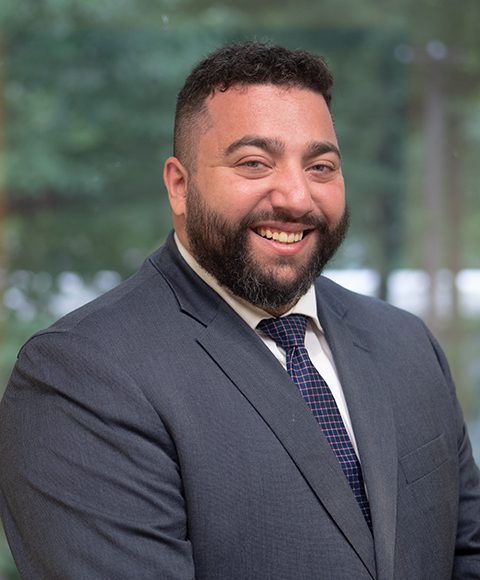
Nicholas A. Marricco is a Senior Associate in Tully Rinckey PLLC’s Manhattan Office, where he focuses his practice on Education Law, Special Education Law, Higher Education Law, Federal Employment Law, and New York State Employment Law. Nicholas has also represented countless families of children with special needs in CSE meetings, CPSE meetings, manifestation determinations, and Impartial Hearings. He is among the few New York State Special Education Attorneys who had an IEP and received special education services as a child. Nicholas’ parents fought for his education as a child and now he zealously advocates for all his clients like his parents did for him.