Too often, deficient residency investigations result in unfounded non-residency determinations. This can be incredibly disruptive and expensive for families. While schools are not required to educate students who reside outside their districts for free, they are obligated to provide specific procedural protections during residency investigations.
Surveillance of Students
Many residency investigations rely upon surveillance. Understandably, this prospect is highly disturbing to parents and students. School districts are legally permitted to conduct reasonable surveillance during residency investigations. Furthermore, investigators are not required to make themselves known to parents. Families may not realize they were under observation until they receive notice of a residency determination.
Some school districts maintain staff to conduct surveillance; others work with contractors or hire private investigators. The student(s), the parent(s), the in-district address and any suspected out-of-district addresses may come under observation. Investigators might watch for where the student goes after school and where they depart from when leaving for school each morning. Hearing officers sometimes think of residency as where a student “lays their head at night.”
Ready to book your consultation? Click below to pay our consultation fee and book your meeting with an attorney today!
Countering Surveillance Evidence in Residency Investigations
Even when a student is a valid resident, surveillance reports might suggest otherwise. Observations over a limited time do not always reflect the whole picture. This is common with temporary living situations, shared care and custody, or cases where the investigation itself is deficient.
Reasonable Explanations
Temporarily staying at a non-resident address does not mean a student loses their entitlement to free in-district schooling. Before excluding the student, parents must be given an opportunity to explain the situation. School officials should take reasonable explanations into account.
It is up to parents to put apparent non-residency in proper context. When the school notifies parents of a residency determination, they must share the evidence used to make their decision, including the times and locations of any surveillance. This should be specific enough that parents can accurately explain irregularities and respond with information of their own.
Insufficient Surveillance
Brief surveillance indicating a student’s non-residence may result in a determination of non-residency. However, simply observing a student’s absence from the in-district residence over a few days is alone unlikely to support non-residency on appeal.
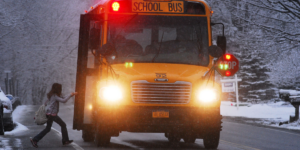
For example: A private investigator observes a student’s in-district address on Monday and Tuesday, and does not see the student entering or leaving the house. Instead, they see a car dropping the student off before the bus arrives each morning and picking the student up again after the school bus afternoon dropoff. Had the investigator conducted surveillance on Wednesday through Sunday, they would have seen signs of the student actually living at the in-district address.
Learn more about navigating non-residency decisions from our article Residency Determinations and Investigations in New York School Districts.
Challenging a Non-Residency Determination
When surveillance mistakenly identifies a student as a nonresident, it falls to parents to prove residency. Schools must give parents the opportunity to counter surveillance reports or other evidence with their own information.
Parents are highly advised to seek professional guidance as soon as they become aware of a residency investigation. Residency determinations can only be appealed to the Commissioner of Education within thirty days of the board’s decision. Opportunities to respond with counterevidence or explanations are not unlimited. It is highly advised to speak with an education attorney as soon as possible to ensure all relevant information is considered. By failing to raise evidence early enough, parents may waive their right to use that evidence to prove residency. Early attorney intervention helps ensure an effective case and may minimize disruptions to the student’s life and education.
Tully Rinckey attorneys understand that issues of contested residency can be challenging, and they will handle your matter with the attention and tact it deserves. If you have additional questions about your rights during a residency investigation, our team of attorneys is available to assist you today. Please call 8885294543 to schedule a consultation, or schedule a consultation online.
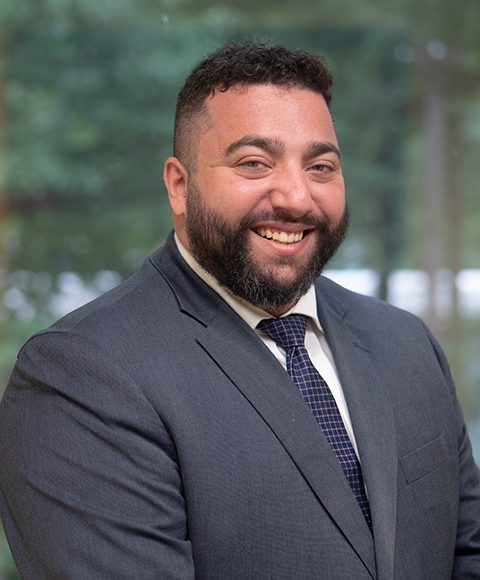
Nicholas A. Marricco is a Senior Associate in Tully Rinckey PLLC’s Manhattan Office, where he focuses his practice on Education Law, Special Education Law, Higher Education Law, Federal Employment Law, and New York State Employment Law. Nicholas has also represented countless families of children with special needs in CSE meetings, CPSE meetings, manifestation determinations, and Impartial Hearings. He is among the few New York State Special Education Attorneys who had an IEP and received special education services as a child. Nicholas’ parents fought for his education as a child and now he zealously advocates for all his clients like his parents did for him.
You can contact us 24 hours a day, 7 days a week via phone at 8885294543, by e-mail at info@tullylegal.com or by clicking the button below: