Marijuana reclassification was a source of hype well before President Trump issued the executive order “Increasing Medical Marijuana and Cannabidiol Research” on December 18, 2025. Despite the hype, the process has only just begun.
Caution for Security Clearance Holders & Applicants
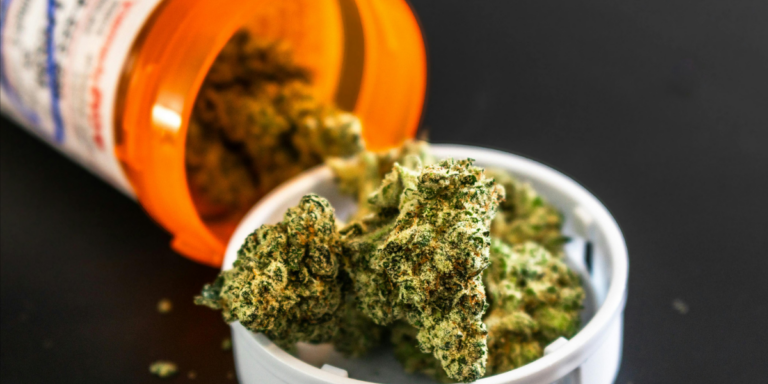
Marijuana has not been fully reclassified at this time. If marijuana becomes a Schedule III substance, security clearance holders and applicants must still exercise caution with medical marijuana. Most “medical marijuana” will remain a federal crime and therefore a reason to deny or revoke a security clearance.
State-legal medical marijuana use, possession, cultivation, and selling could still trigger security concern under:
- Guideline H – Drug Involvement and Substance Misuse
- Guideline E – Personal Conduct
- Guideline J – Criminal Conduct
Marijuana Rescheduling vs. Legalization for Recreational Use
Rescheduling is not the same as legalizing marijuana for recreational use, nor even for state-legal medical use. The President cannot unilaterally reschedule drugs himself either; President Trump’s executive order directed the Attorney General to initiate the administrative process required to reclassify marijuana from Schedule I to Schedule III. Plenty of red tape must still be crossed.
Schedule III is assigned to drugs that have both an accepted medical use as well as some potential for abuse and dependence. Reclassifying cannabis as Schedule III would put it in the same schedule as anabolic steroids. Possession or use of a Schedule III drug without a valid prescription is federally illegal: with or without a state-legal medical marijuana prescription. 21 U.S.C. § 844(a).
Ready to book your consultation? Click below to pay our consultation fee and book your meeting with an attorney today!
The Problem with State-Legal Medical Marijuana
So far as the U.S. government is concerned, states can’t actually legalize marijuana: for medical purposes or otherwise. Under the U.S. Constitution’s Supremacy Clause, when federal law conflicts with state law, federal trumps state. “State-legal activities” involving marijuana—including prescription medicinal cannabis use—remain a federal crime.
Medical marijuana users may still be liable for violating the Controlled Substances Act (CSA). While a Congressional appropriations rider keeps the Department of Justice from pursuing prosecutions for state-legal medical marijuana cultivation, distribution, possession, and use for medical purposes, this is only an enforcement limitation. It does not eliminate criminal liability for violations of the CSA. And it certainly doesn’t eliminate marijuana as a source of security clearance denials and revocations.
Remaining Uncertainty with Medical Marijuana under Schedule III
Paying for Medical Marijuana under Schedule III
If you have purchased marijuana from a medical dispensary, you likely paid in cash. Facilitating transactions for a federally illegal product is a risk most banks and major credit card companies will not accept. Under federal anti-money laundering laws (18 U.S.C. §§ 1956(a)), for instance, Banks and credit card companies could face adverse actions from federal regulators for providing financial services to illegal business or handling funds connected to a federal crime. This includes transactions of Schedule I drugs, like cannabis.
Should marijuana be rescheduled to Schedule III, this does not necessarily mean banks and credit card companies will permit state-legal dispensaries to process cannabis transactions. It is unclear what specific cannabis-derived compounds the FDA may approve, or what avenues may become available for currently operational medical marijuana dispensaries to be brought into compliance with federal law. Unless that happens, it may not be worth the risk for financial institutions.
Evolving Relationship Between State and Federal Law
Most states permit some form of medical marijuana. It remains to be seen if those states will update their own laws in response to a federal schedule change of cannabis. It is also unclear whether Congress will continue to shield users and providers of state-legal medical marijuana.
For over a decade, Congress has passed its annual budget with a provision to limit Department of Justice interference in state-legal medical marijuana activities. The rider prevents the DOJ from using tax-payer funds to prosecute states for employing their own medical marijuana laws. This does not make these activities legal; medical marijuana cultivation, dispensation, possession, and use still violate the CSA—in any state.
It is possible that rescheduling cannabis will result in more regulation of medical marijuana in states currently operating medical marijuana dispensaries. Likewise, Congress may stop shielding state-legal medical marijuana programs and those who use them from DOJ prosecution in future appropriations.
You can contact us 24 hours a day, 7 days a week via phone at 8885294543, by e-mail at info@tullylegal.com or by clicking the button below:
Most Marijuana Possession Still Illegal Under Schedule III
Once marijuana becomes a Schedule III substance, testing positive for marijuana will still pose issues for security clearance holders. This is true of all Schedule III substances to some extent, with exceptions for therapeutic use.
For example, if you take certain ADHD medication, you may test positive for amphetamine. If you have a valid Adderall prescription and your levels are consistent with the prescribed, therapeutic amount, this may be fine. If the amount exceeds your prescribed dose, or you don’t have a prescription at all, that is a Guideline H violation (at least).
Such exceptions for prescriptions are only possible because enough studies have been conducted and reviewed for the government to assert what dosage constitutes a medically recognized therapeutic amount versus an amount exceeding that threshold. Rescheduling marijuana only makes it easier for the required studies to take place and for drugs containing cannabis to be tested, reviewed, and approved by the FDA.
Miles of Red Tape Remain Following Rescheduling
As of now, one drug containing CBD is currently an FDA-approved treatment for specific forms of epilepsy. A synthetic form of THC is part of an FDA-approved drug for treating loss of appetite and nausea related to HIV, anorexia, and chemotherapy treatment.
Some security clearance holders may eventually be able to access prescription medical marijuana without compromising their eligibility for access, but that will not be for some time. Furthermore, it is unlikely FDA-approved cannabis will be anything like the weed and edibles available from state-legal medical marijuana dispensaries currently in operation.
Security clearance holders and applicants as well as servicemembers and federal personnel be advised: marijuana hasn’t been rescheduled yet. And even if marijuana is reclassified as a Schedule III drug, too much uncertainty and risk remains to give in to the rescheduling hype.
Tully Rinckey attorneys understand that issues involving security clearances and drug use can be challenging, and they will handle your matter with the attention and tact it deserves. If you have additional questions, our team of dedicated security clearance attorneys is available to assist you today. Please call 8885294543, or schedule a consultation online.
As a Managing Partner at Tully Rinckey PLLC, Anthony Kuhn focuses much of his time on the representation of military personnel and members of the intelligence community. He has extensive experience assisting clients in navigating matters involving security clearance suspensions and revocations, appeals to the Discharge Review Boards and Boards for Correction of Military Records, UCMJ violations and non-judicial punishment, appeals for service-connection before the Department of Veterans Affairs, rebuttals to GOMORs and QMP selection notifications and requests for Special Selection Boards. He also serves as the Chair of the National Security Lawyers Association.